This chart maps the relationship archetype between every pair of the sixteen Myers–Briggs (MBTI) personality types. Find one type in the left column and the other across the top row — the cell where they meet names the dynamic between them. For example, an ENFP and an INFJ land on Pedagogue, while two of the same type share an Identity relationship (highlighted down the diagonal).
The framework comes from the Jungian-function analysis popularized by TypeLogic: it compares how the dominant, auxiliary, tertiary, and inferior functions of two types line up, and what that tends to feel like in practice. The table is symmetric — the relationship between A and B is the same as between B and A.
The pairing grid
| ↓ type / type → | ENFP | ESTJ | ENTP | ESTP | INFP | INTP | ISTP | ENFJ | ESFJ | ENTJ | ESFP | INFJ | ISFJ | INTJ | ISFP | ISTJ |
|---|---|---|---|---|---|---|---|---|---|---|---|---|---|---|---|---|
| ENFP | Identity | Supplement | Companion | Enigma | Pal | Tribesman | Novelty | Complement | Suitemate | Advisor | Neighbor | Contrast | Cohort | Pedagogue | Counterpart | Anima |
| ESTJ | Supplement | Identity | Suitemate | Complement | Anima | Cohort | Contrast | Enigma | Companion | Neighbor | Advisor | Novelty | Tribesman | Counterpart | Pedagogue | Pal |
| ENTP | Companion | Suitemate | Identity | Neighbor | Tribesman | Pal | Counterpart | Advisor | Supplement | Complement | Enigma | Pedagogue | Anima | Contrast | Novelty | Cohort |
| ESTP | Enigma | Complement | Neighbor | Identity | Novelty | Counterpart | Pal | Supplement | Advisor | Suitemate | Companion | Anima | Pedagogue | Cohort | Tribesman | Contrast |
| INFP | Pal | Anima | Tribesman | Novelty | Identity | Companion | Anima | Contrast | Cohort | Pedagogue | Counterpart | Complement | Suitemate | Advisor | Neighbor | Supplement |
| INTP | Tribesman | Cohort | Pal | Counterpart | Companion | Identity | Neighbor | Pedagogue | Anima | Contrast | Novelty | Advisor | Supplement | Complement | Enigma | Suitemate |
| ISTP | Novelty | Contrast | Counterpart | Pal | Anima | Neighbor | Identity | Anima | Pedagogue | Cohort | Tribesman | Supplement | Advisor | Suitemate | Companion | Complement |
| ENFJ | Complement | Enigma | Advisor | Supplement | Contrast | Pedagogue | Anima | Identity | Neighbor | Companion | Suitemate | Pal | Counterpart | Tribesman | Cohort | Novelty |
| ESFJ | Suitemate | Companion | Supplement | Advisor | Cohort | Anima | Pedagogue | Neighbor | Identity | Enigma | Complement | Counterpart | Pal | Novelty | Contrast | Tribesman |
| ENTJ | Advisor | Neighbor | Complement | Suitemate | Pedagogue | Contrast | Cohort | Companion | Enigma | Identity | Supplement | Tribesman | Novelty | Pal | Anima | Counterpart |
| ESFP | Neighbor | Advisor | Enigma | Companion | Counterpart | Novelty | Tribesman | Suitemate | Complement | Supplement | Identity | Cohort | Contrast | Anima | Pal | Pedagogue |
| INFJ | Contrast | Novelty | Pedagogue | Anima | Complement | Advisor | Supplement | Pal | Counterpart | Tribesman | Cohort | Identity | Neighbor | Companion | Suitemate | Enigma |
| ISFJ | Cohort | Tribesman | Anima | Pedagogue | Suitemate | Supplement | Advisor | Counterpart | Pal | Novelty | Contrast | Neighbor | Identity | Enigma | Complement | Companion |
| INTJ | Pedagogue | Counterpart | Contrast | Cohort | Advisor | Complement | Suitemate | Tribesman | Novelty | Pal | Anima | Companion | Enigma | Identity | Supplement | Neighbor |
| ISFP | Counterpart | Pedagogue | Novelty | Tribesman | Neighbor | Enigma | Companion | Cohort | Contrast | Anima | Pal | Suitemate | Complement | Supplement | Identity | Advisor |
| ISTJ | Anima | Pal | Cohort | Contrast | Supplement | Suitemate | Complement | Novelty | Tribesman | Counterpart | Pedagogue | Enigma | Companion | Neighbor | Advisor | Identity |
The archetypes, defined
| Identity | Same types: a typological mirror-image. |
|---|---|
| Pal | Work and play well together: minimal natural type conflict. |
| Pedagogue | Each is both the other's mentor and student: has a “parent to child” feel. |
| Advisor | Each has an area of insight that the other lacks. |
| Companion | Similar modes of expression: bear each other's company well. |
| Complement | Compatible strengths with opposite emphases. |
| Supplement | Like Pal, but functions are farther removed: each can add to the other's strengths. |
| Cohort | Mutually drawn into experiential escapades. |
| Tribesman | Share a sense of culture, but with different interests and abilities. |
| Anima | Fits Dr. Beebe's description of the anima/animus: each is the other's inferior (4th) function. |
| Contrast | Point and counterpoint on each function. |
| Counterpart | Perform similar functions in totally different realms. |
| Enigma | A puzzle: totally foreign in nearly every facet. |
| Neighbor | Arrive at the same place by variant processes. |
| Novelty | Intriguingly different: interestingly so. |
| Suitemate | A person one might be comfortable sharing an office with. Prefer similar climates, but don't necessarily have much in common as far as goals or world view. |
The original chart
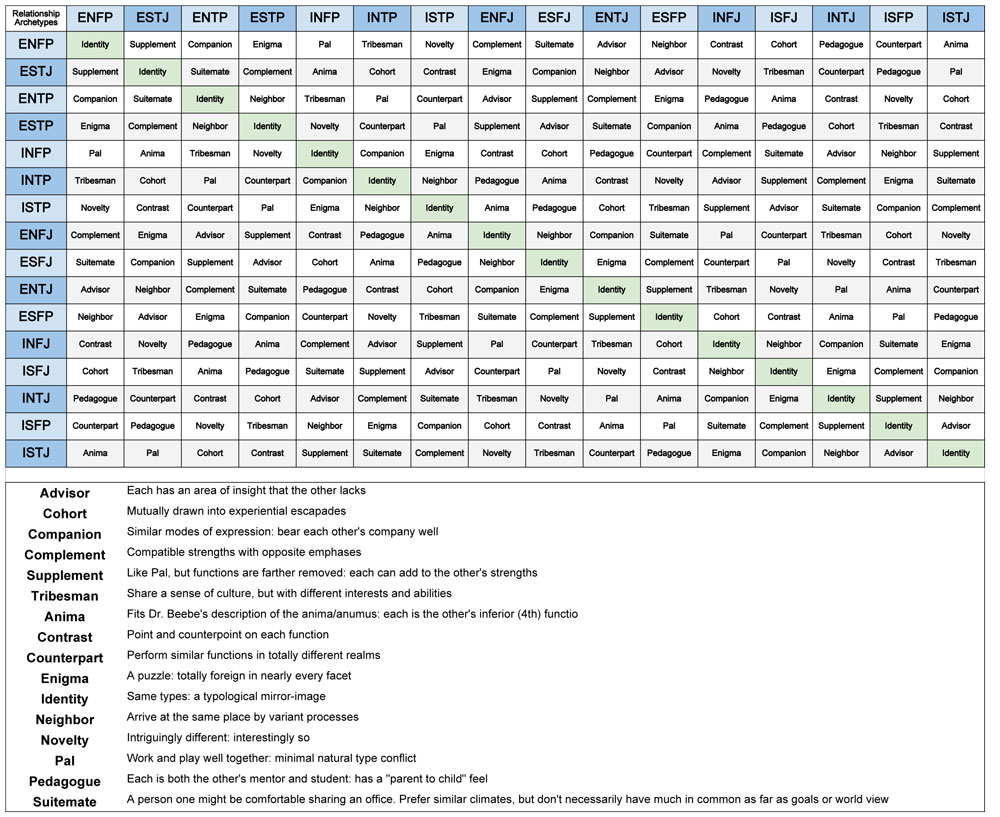
Archetype framework and definitions adapted from TypeLogic. Chart reproduced here for reference and preservation.